
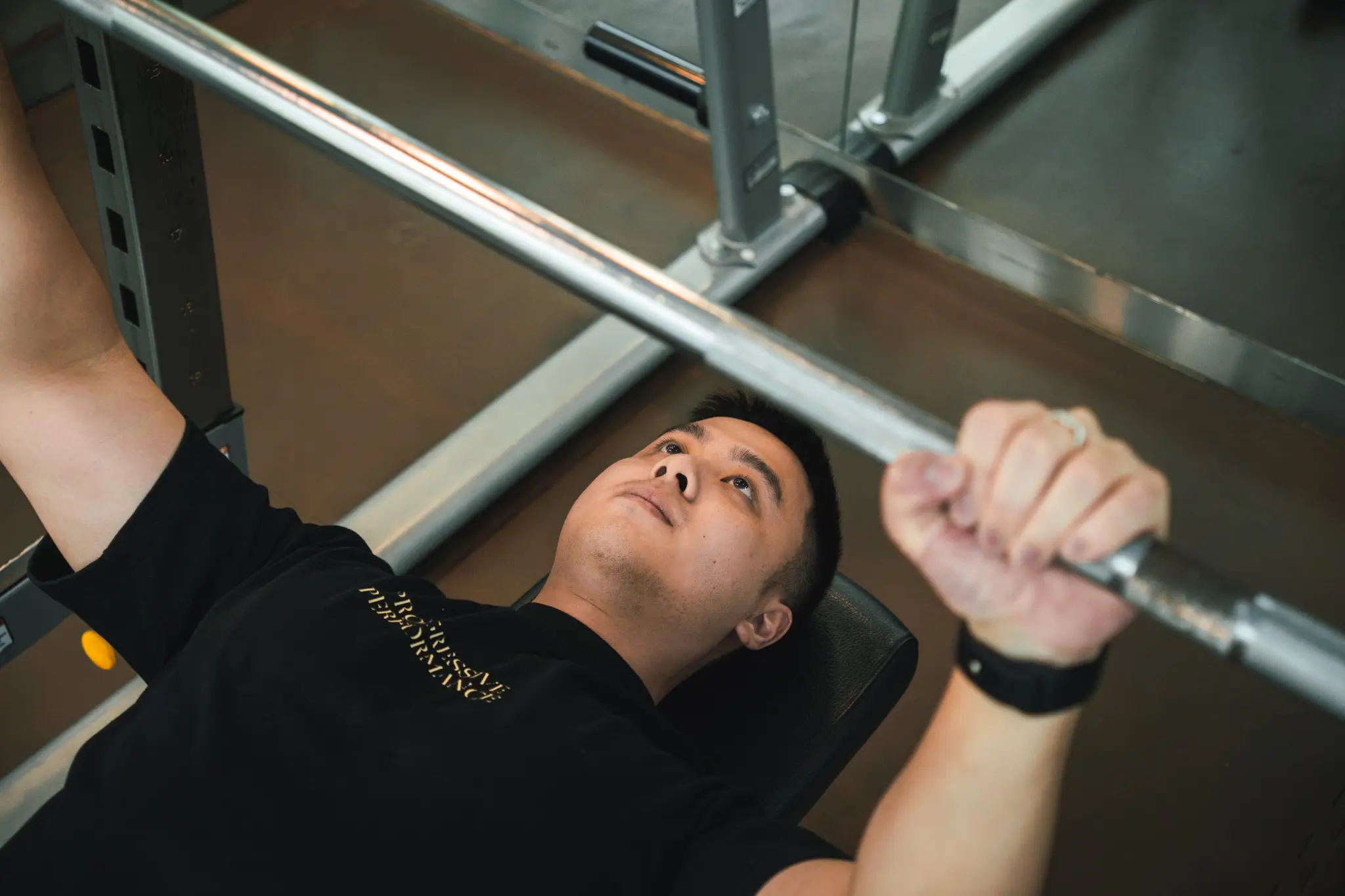
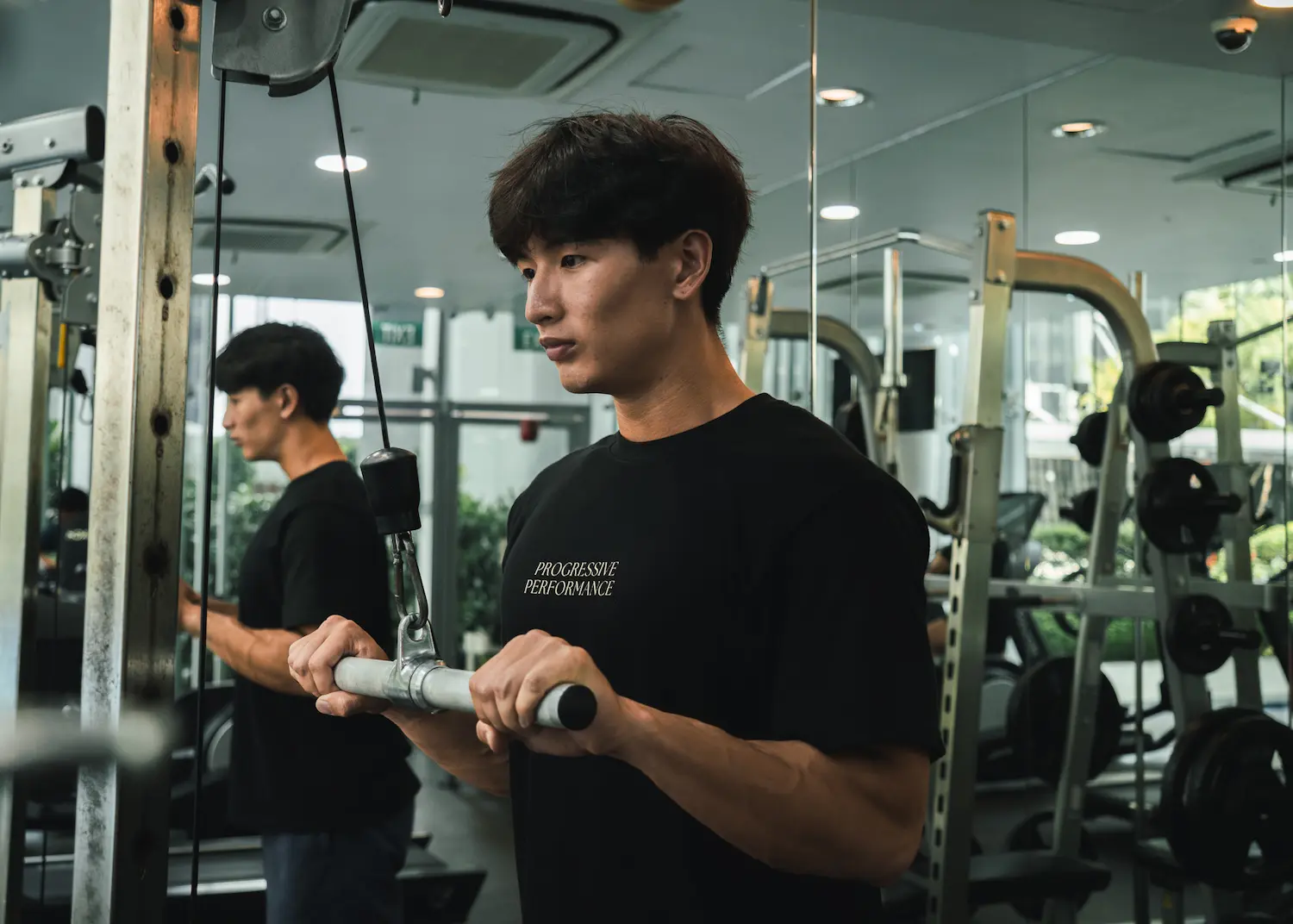
Starting strength training can feel oddly public. The equipment may be unfamiliar, the free-weights area can look busy, and online advice often assumes every woman has the same goal, body, schedule and confidence level.
She does not. A useful starting point is not a smaller version of someone else's programme or a list of exercises labelled for women. It is a set of manageable decisions: what you want training to support, what you can currently do, which environment helps you concentrate, what guidance you need and which questions sit outside a coach's scope.
Quick answer: how can women start strength training?
Women can begin strength training with manageable movement options and a plan that considers training history, preferences, schedule, equipment, relevant health context and current capacity. Sex or gender alone does not determine one universal programme. Pregnancy, postpartum return, menopause symptoms, pain, injury, medical conditions or uncertainty about exercise suitability may require guidance from an appropriately qualified healthcare professional before or alongside training.
For someone exploring personal training in Singapore, the useful question is not which routine is labelled for women. It is, "What starting decision would make training understandable, repeatable and appropriate for me?"
What strength training means - without a generic women's workout
Strength training is a broad category. It involves working against resistance and organising that work so the challenge can be reviewed over time. Resistance might come from free weights, machines, cables, bodyweight or other equipment. The label alone does not prescribe an exercise list, a training split or a particular appearance goal.
The same is true of "women's strength training". Women are not one uniform training group. Experience, current capacity, goals, injury or medical context, pregnancy or postpartum considerations, menopause-related questions, time available, access to equipment and personal preference can all affect the plan. Those differences deserve individual attention; they do not justify assuming that every woman needs a fundamentally different rep range, intensity or set of exercises.
This matters because gendered marketing often replaces useful decisions with promises: workouts that supposedly cannot make a woman bulky, routines designed to create one body shape, or programmes presented as hormone solutions. "Bulky" is subjective. Changes in strength, muscle size, body composition and appearance vary with training, nutrition, genetics, history and time. A responsible starting conversation should clarify your goal without telling you how your body ought to look.
If uncertainty about the first appointment is part of the hesitation, our guide to a first personal training session in Singapore explains the questions worth confirming before you attend. It does not prescribe a workout; it helps you understand the format and make a better decision.
What a sensible starting point depends on
The most sensible entry point is the one that gives you enough challenge to learn from without demanding skill, confidence or recovery capacity you have not yet established. That decision depends on context, not on passing a fitness test.
Consider these areas:
- Training history. Someone new to structured resistance training may need more time to understand setup, terminology and technique. Someone returning after a long break may remember movements but still need to re-establish tolerance and confidence.
- Current capacity. The relevant question is what you can do today with reasonable control and understanding, not what you once lifted or what someone similar appears to manage.
- Goal. Training for general strength, a recreational activity, day-to-day capability or learning a skill can lead to different decisions. A goal should guide the programme without becoming a guaranteed result.
- Schedule. A plan has to fit work, family, travel and other activity. A theoretically ideal week that rarely happens is less informative than a routine you can review in ordinary life.
- Preferences. Some people like barbells; others prefer machines, dumbbells or a quieter start. Preference is not trivial when it affects whether you can focus and practise consistently.
- Equipment and environment. The available setup, coaching access, crowding, privacy and facility rules influence what is practical.
- Relevant health context. Pain, injury, pregnancy, postpartum recovery, medication effects, unexplained symptoms, medical conditions or uncertainty about exercise suitability may change what information or professional guidance is needed.
Age may be one part of that context, but it should not be used as a diagnosis of capacity. Readers whose main question is age-related can use the separate guide to strength training over 40 in Singapore; this article remains focused on women starting or returning at different adult ages.
The starting point should also be reviewable. You should be able to explain why an exercise or format was chosen, what you are trying to learn and what information would lead to an adjustment. That is more useful than being handed a "beginner" label with no decision process behind it.
How progression can work without a universal programme
Progression means that the training challenge does not remain accidental. It does not mean adding weight every session or following one fixed timetable. Depending on the exercise and goal, progression might involve improving control, learning a larger or more suitable range of motion, completing more work at a similar level of effort, using a different variation, or increasing resistance when the current task is consistently manageable.
Those choices should be based on more than one good or bad day. Sleep, stress, menstrual symptoms, travel, unfamiliar equipment and other activity can affect how a session feels. A useful review looks for patterns: whether the task is understood, whether technique remains controlled, whether recovery is manageable and whether the programme still serves the stated goal.
The scale is not a complete progression measure. If your main uncertainty is whether to prioritise total body weight or changes in strength and body composition, the guide to body recomposition versus weight loss in Singapore explains why those are different goals and why measurement has limits. Strength training should not be reduced to an appearance test.
Avoid turning progression into a race against another person. Two women can begin on the same day, use different exercises or loads and both be making sensible decisions. The relevant comparison is whether your own plan remains clear, tolerable and connected to what you are trying to do.
Equipment, environment and privacy questions to consider
A facility with more equipment is not automatically easier to learn in. Before choosing an environment, consider what will help you pay attention to the training rather than manage avoidable uncertainty.
Useful questions include:
- Is the equipment you expect to use available, and can someone explain unfamiliar setup?
- Is there enough space to practise without feeling rushed or obstructing others?
- How busy is the facility at the times you can realistically attend?
- Are coaching, facility access and independent training governed by different terms?
- What are the changing, storage, footwear, towel and access arrangements?
- Can you ask not to be photographed or filmed, and how is consent recorded?
- How are personal details, measurements and relevant health information collected and handled?
- If privacy matters to you, what can the provider actually confirm about the space and coaching arrangement?
A woman does not need to choose a women-only facility merely because she is a beginner. She may prefer one, but privacy, comfort and coaching quality should be checked through specific facts rather than assumptions about a label. Likewise, a private-looking studio does not prove that every session is one-to-one or that no one else will be present.
Try to distinguish discomfort that comes from learning something new from an environment that repeatedly prevents you from concentrating or asking questions. The first may ease with familiarity. The second may be a genuine fit issue.
When individual coaching may be useful
Individual coaching can be useful when you want help turning broad goals into training decisions, learning unfamiliar exercises, receiving feedback, reviewing progression or adapting the plan when circumstances change. It can also reduce the amount of trial and error involved in navigating equipment and programme choices.
That does not make coaching mandatory, and it does not guarantee safety, adherence, faster progress or results. Some women are comfortable learning independently from reliable sources and using a gym on their own. Others value a coach's attention while they establish a starting point. Some may use coaching for a period and later train more independently.
If you are considering one-to-one personal training, confirm what the format currently includes rather than assuming it is a women-specific programme. Ask how the coach selects exercises, gives feedback, reviews progress, handles sensitive information and responds when a question falls outside training scope.
A useful coach should be able to explain the reason for a decision without presenting personal preference as universal science. They should also be willing to say when they do not know, when more information is needed or when referral to an appropriately qualified professional is the responsible next step.
Pregnancy, postpartum, menopause and medical considerations
Pregnancy, postpartum return and menopause are relevant contexts, but none can be responsibly addressed with one generic paragraph of exercise instructions.
During pregnancy, exercise decisions may depend on individual health, symptoms, pregnancy history and clinical guidance. A personal trainer should not diagnose pregnancy-related concerns or replace an appropriately qualified healthcare professional. If you are pregnant and unsure about exercise suitability, obtain individual guidance before relying on a general programme.
Postpartum return is not defined only by the number of weeks since birth. Recovery, delivery history, symptoms, pelvic-floor concerns, sleep, feeding demands, prior training and medical guidance may all matter. Pain, heaviness, leakage, pressure, unusual bleeding, dizziness or other concerns deserve appropriate clinical attention rather than being treated as a motivation problem.
Menopause may affect the questions a woman brings to training, including symptoms, preferences, recovery or medical context. It should not be used to promise hormone balance, symptom treatment, bone-density improvement, fat loss or a particular body-composition outcome. Ask what the coach can support within general training scope and when referral is appropriate.
The same boundary applies to pain, injury, medical conditions, medication effects, unexplained symptoms, eating-disorder concerns and uncertainty about exercise readiness. General fitness coaching and healthcare have different roles. Individualised dietetics and medical nutrition belong with a registered dietitian or qualified clinician; a coach may discuss general habits only within their verified non-medical scope.
Questions to ask before choosing support
A good comparison is built from specific questions, not from the most confident sales language. Before choosing a coach or service, ask:
- How will you establish my starting point? The answer should cover training history, goals, preferences and relevant constraints without presenting a coaching observation as a diagnosis.
- How do you decide which exercises to use? Look for a reasoned process and alternatives, not a universal women's template.
- How will progression be reviewed? Ask what information matters and how the plan changes when recovery, schedule or preferences change.
- What is within your scope? Clarify training instruction, general habit support, referrals and limits around medical, pregnancy, postpartum, menopause and nutrition questions.
- How do you handle privacy and consent? Ask about photographs, filming, measurements, personal information and who can access records.
- What environment will I actually train in? Confirm the space, likely crowding, equipment access and whether the format matches what is being sold.
- Who will coach me? Do not assume a particular coach gender, permanent match or specialist qualification unless it is confirmed.
- What are the current commercial terms? Request the price, inclusions, payment, expiry, scheduling, rescheduling, cancellation and refund terms in writing.
The wider guide on how to choose a personal trainer in Singapore covers qualifications, communication, scope and fit in more detail. For this article, the women-specific question is whether the provider treats your context as individual information rather than a reason to apply stereotypes.
When comparing the cost of a personal trainer in Singapore, look beyond a session number. Check the coaching format, what support is included, how review works and which terms affect the actual commitment. Do not assume that a higher or lower price proves better fit.
Frequently asked questions
Is strength training suitable for women who are beginners?
It can be an option for many adult beginners, but the starting point should reflect the individual's current capacity, experience, preferences, environment and relevant health context. No single exercise or programme is suitable for everyone. Pain, medical conditions, pregnancy, postpartum needs or uncertainty about exercise suitability may require appropriately qualified guidance.
Do women need a different strength training programme from men?
Not solely because they are women. Goals, experience, current capacity, preferences, equipment, schedule and relevant health context usually provide more useful programme information than a gender template. Individual considerations can change exercise or progression decisions, but they should not be converted into one universal women's routine.
How many times a week should women strength train?
There is no universal weekly number for every woman. Frequency depends on the goal, current capacity, programme design, other activity, recovery, preferences, schedule and relevant health context. A sensible plan should be realistic enough to repeat and flexible enough to review, rather than copied from someone else's calendar.
Will lifting weights make women bulky?
"Bulky" is subjective, so no responsible answer can promise how a person will look. Changes in strength, muscle size, body composition and appearance vary with training, nutrition, genetics, history and time. Define the outcome you actually care about and avoid programmes that use fear or body-shaming to sell one ideal shape.
What should women consider during pregnancy, postpartum or menopause?
Consider individual symptoms, medical guidance, training history, current capacity, preferences and recovery context. A coach should stay within training scope and refer appropriately. Pregnancy, postpartum concerns, pelvic-floor symptoms, pain, medical conditions or uncertainty about exercise suitability may require guidance from an appropriately qualified healthcare professional.
When might personal training be useful for strength training?
Personal training may be useful when someone wants help with structure, exercise selection, equipment setup, feedback, progression or adapting decisions to changing circumstances. It is not required for everyone and cannot guarantee safety, adherence, faster progress or results. Confirm the coach's scope, communication, environment and commercial terms before committing.
Build the next step around your actual starting point
When considering strength training for women in Singapore, the useful next step is not to find a programme that claims to work for all women. It is to make your own starting point specific enough to act on.
Write down your recent training experience, the goal you want training to support, the schedule you can realistically maintain, the environment you prefer and any health or life-stage questions that need qualified input. Then decide what support, if any, would make those choices clearer.
Considering strength training in Singapore? Contact Progressive Performance with your training experience, goal, schedule, preferred environment and any questions you want clarified before a first conversation. Ask the team to confirm the current coaching format, availability, pricing and scope.