
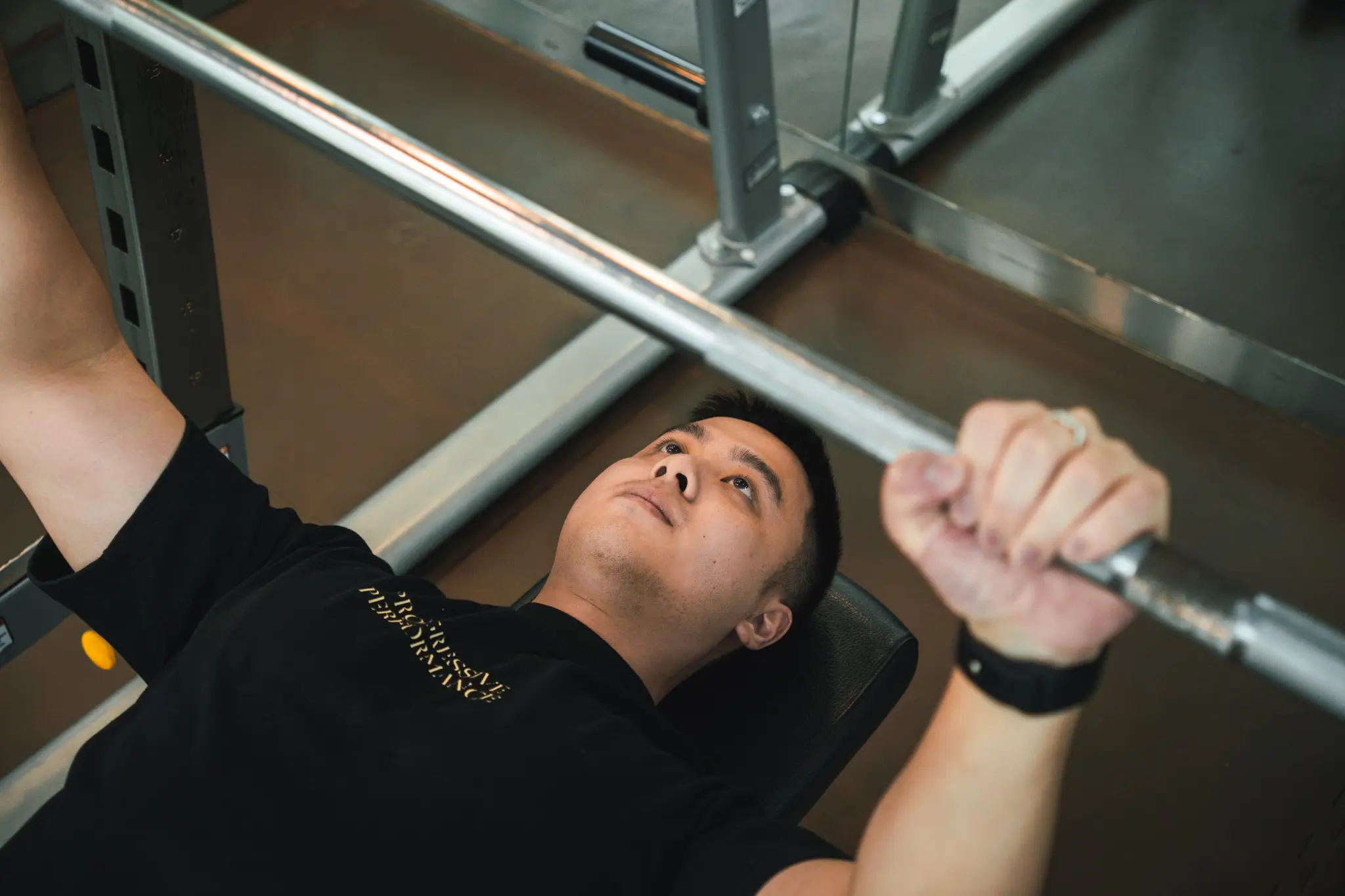


The difficult part of training after 40 is rarely finding one hard workout.
It is building an approach that still makes sense when a normal Singapore workweek includes an early call, a late meeting, a flight, a poor night's sleep or a family commitment.
That is why strength training over 40 in Singapore should begin with a more useful question than, "What programme suits my age?"
The better question is: "What can I do well now, what can I recover from, and what can I repeat often enough to progress?"
Age is relevant context. It is not a diagnosis, a measure of ability or proof that someone needs an easier version of training. A 48-year-old who has trained consistently for years may need a very different starting plan from a 42-year-old returning after a long break. The programme should respond to the person, not a stereotype.
Quick answer: what should strength training over 40 in Singapore prioritise?
A sensible plan should prioritise five things: your current ability, sound exercise execution, gradual and reviewable progression, recovery that reflects the rest of your life, and a schedule you can sustain.
There is no universal number of weekly sessions, exercises or sets that suits everyone over 40. The right structure depends on your goal, training experience, other activity, work demands, travel and how you respond to the programme. The objective is not to train like the youngest person in the room or to prove how much you once lifted. It is to make the next appropriate training decision and keep making it.
Start with current capacity, not your age or your old peak
Many people return to strength training with two reference points: what they used to do and what they think someone their age should be able to do. Neither is a reliable starting assessment.
Past performance can be useful history, but it does not describe today's exercise familiarity, control, tolerance for training or weekly capacity. Age can influence the conversation, but it does not tell a coach what you can execute well now.
A useful starting discussion may cover:
- what you have trained before and how recently;
- which exercises feel familiar or unfamiliar;
- what you want strength training to support;
- what a normal and a difficult workweek look like;
- what other sport or activity already occupies your week;
- how travel and sleep disruption tend to affect your routine; and
- any relevant limitation or concern that should be discussed privately.
The point is not to collect every possible measurement. It is to gather information that changes a coaching decision.
In a structured one-to-one personal training service, that starting picture can guide exercise selection, the pace of progression and the amount of work planned. Individualised does not mean making every session different. It means having a reason for what is included and a method for adjusting it.
A practical framework
Five priorities that make an over-40 strength plan more practical

1. Choose exercises you can learn and repeat well
An exercise earns its place when it suits the current goal, can be set up consistently and gives the coach and client something useful to review. Difficulty by itself is not a reason.
For someone returning after years away, the early task may be rebuilding familiarity and control. For an experienced lifter, it may be finding variations that fit the present training history, schedule and preferences. Neither person needs a random circuit designed mainly to feel punishing.
Good technique is not a performance for the camera. It is a repeatable way to complete the intended movement with appropriate control. Coaching should make the setup and purpose clearer, then help the client recognise when execution is changing.
2. Progress gradually, but do not confuse gradual with passive
Progression does not always mean adding weight at every session. Depending on the plan, it may involve more consistent execution, a useful change in range, additional quality work, a more suitable exercise, or a load adjustment when the existing work is being handled well.
The important point is that progression is deliberate and reviewable. A coach should be able to explain what would justify a change and what would justify holding the plan steady.
This matters during busy periods. If a client has returned from travel, slept poorly or missed training, blindly continuing from the last number in the log may be less useful than reviewing the day in front of them. Adjustment is not failure. It is part of programme management.
3. Treat recovery as information, not a test of toughness
Training exists inside the rest of the week. Work stress, long flights, irregular sleep, other physical activity and the recent training load can all affect what is practical on a given day.
That does not mean every difficult week requires abandoning the programme. It means recovery should inform the decision. The useful questions are concrete:
- Has training quality changed across recent sessions?
- Is the planned work still being executed as intended?
- Has travel interrupted the routine or only shifted it?
- Does the next session need to progress, repeat or be adjusted?
- Is the overall plan still realistic for the next few weeks?
The answer should not come from age alone. It should come from the available information and the person's response.
4. Build a minimum viable week
Busy professionals often plan training around an ideal week, then judge themselves against that plan when real work arrives. A more durable approach distinguishes between the ideal structure and the minimum useful structure that preserves direction during a disrupted period.
That minimum is individual. It is not a universal two-day or three-day rule. It may affect session length, exercise choice, location or how the week is reorganised. What matters is deciding in advance what should happen when the calendar becomes difficult.
Our separate guide to personal training for busy professionals in Singapore CBD looks more closely at schedule fit. For an over-40 strength plan, the central issue is not squeezing in activity at any cost. It is preserving enough consistency to keep the programme understandable and reviewable.
5. Review the plan, not only the latest workout
A good session can still belong to a poor programme. Conversely, one untidy session after a flight does not prove the programme has failed.
Useful reviews look beyond how the last workout felt. They consider what has been completed, how exercises are being executed, what has changed, which constraints are temporary and what should happen next.
For a busy professional, this prevents two common extremes: forcing progress because the plan says so, or restarting from zero every time work interrupts the routine.
How often should a busy professional over 40 train?
There is no responsible universal answer.
Frequency should reflect the goal, current experience, total activity, recovery, session content and the time a person can genuinely protect. Someone who is new to resistance training may need a different structure from someone who already plays sport, travels weekly or has years of lifting experience.
Instead of beginning with a fixed number, work through four decisions:
- What is the purpose of the programme now?
- How much relevant training is already in the week?
- Which training windows remain reliable during a demanding month?
- What structure can be resumed without confusion after disruption?
More sessions are not automatically better if they cannot be completed or recovered from. Fewer sessions are not automatically sufficient because they are convenient. The plan has to be judged by the individual response and the quality of work it makes possible.
Before work, at lunch or after work: choose the slot by friction
The most practical training window is not necessarily the one that looks most disciplined. It is the one that creates the least repeated friction while allowing enough time to train without rushing the whole experience.
Before-work training may suit someone whose evenings change constantly, but it also requires an honest view of sleep and morning logistics. Lunchtime can reduce commuting friction for someone already in the CBD, provided the full door-to-desk window is realistic. After-work training may be easier physically for some people, but late meetings can make it less predictable.
If you are considering a personal trainer in the CBD, ask about current availability rather than assuming a particular slot exists. Then assess the complete routine: travel, changing, training, returning to work or home, and what happens when the preferred window disappears.
Schedule realism is not lowering the standard. It is removing a preventable source of inconsistency.
Returning after a long break: do not try to compress the comeback
People who have trained before often remember the confidence and numbers from their strongest period. The temptation is to treat the first few weeks back as a rapid journey to the old level.
A more useful return starts from present capacity. Familiar exercises may come back quickly, but familiarity does not remove the need to review execution, loading and the response to the overall session. The programme can progress as current evidence supports it; it does not need to honour an old calendar.
This is also where restraint has commercial value. A coach should not sell urgency by implying that turning 40 creates a closing window. The client needs a clear starting point and a process, not fear about age.
What to discuss before starting
A productive consultation should give both sides enough information to decide whether the coaching relationship and training structure make sense.
Useful topics include:
- the main goal and why it matters now;
- recent and past training experience;
- exercise preferences and strong dislikes;
- the normal work, travel and family schedule;
- other sport or physical activity;
- the kind of feedback and accountability preferred;
- what the coaching service includes; and
- relevant limitations that may affect exercise selection or require separate professional guidance.
A personal trainer does not diagnose or treat pain, injuries or medical conditions. If you have pain, an injury, a medical condition, or uncertainty about whether exercise is suitable, seek guidance from an appropriately qualified healthcare professional before starting or changing training.
Keep sensitive health details for an appropriate private conversation. An initial public form or casual message only needs enough information to arrange the next step.
When one-to-one coaching may be worth considering
A gym membership may be enough for someone who already knows how to organise training, execute the exercises, progress the programme and stay consistent through changing weeks.
Coaching becomes more relevant when the missing piece is judgment rather than access. That may include deciding where to start, receiving feedback on execution, adjusting the plan after travel, understanding when to progress, or maintaining direction when the week is crowded.
The value is not simply having another person present for an hour. It is reducing repeated decisions and making the plan easier to understand.
If you are comparing personal training in Singapore, ask how the service handles assessment, programme design, progress review and disruption. Premium coaching should be specific about its process. It should not depend on a promise that every client will achieve the same outcome.
What if body composition is part of the goal?
Body-composition goals often sit alongside strength goals, but the two should not be collapsed into a guaranteed transformation claim.
Training is one part of a wider picture that can include nutrition, daily routines, recovery and consistency. The relevant approach depends on the person, and no responsible article can promise a result or timeline from age and session frequency.
Our guide to body recomposition in Singapore explains that goal in its own service context. For this article, the important decision is whether the strength plan is appropriate, progressive and workable enough to support the broader effort.
Consultation checklist for a Singapore professional over 40
Bring a short, useful brief rather than trying to produce a complete fitness autobiography.
- My main goal is...
- I want to address it now because...
- My recent training has looked like...
- The exercises or activities I know well are...
- A normal workweek allows...
- Travel or late meetings usually disrupt...
- The coaching support I would find useful is...
- A relevant limitation or concern to discuss privately is...
- Before committing, I want clarity on assessment, progression, reviews, scheduling and what the service includes.
This gives a coach something practical to respond to. It also helps you judge whether the proposed plan fits your actual life rather than an idealised week.
Practical questions
Frequently asked questions
Is it too late to start strength training after 40?
No age by itself determines whether someone can begin. The starting plan should reflect current ability, training history, goals and any relevant limitations. If you are unsure whether exercise is appropriate because of pain, injury or a medical condition, seek qualified healthcare guidance first.
How should a beginner over 40 start strength training?
Start by clarifying the goal and current capacity, then choose a manageable set of exercises that can be learned and repeated consistently. Progress should be gradual and based on how the work is being executed and tolerated, not on a fixed timeline or what someone else is lifting.
How often should a busy professional strength train?
It depends on the goal, experience, other activity, recovery and the training windows that can be sustained. There is no universal weekly frequency for every busy professional over 40. A useful plan should explain why its frequency fits the individual and how it will be adjusted when circumstances change.
Does strength training after 40 need to be different?
Not simply because of age. Training should always reflect the person's current ability, history, goals, preferences and response. After 40, many professionals benefit from being more deliberate about progression, recovery and schedule fit, but that does not mean everyone needs a reduced or age-labelled programme.
Can strength training fit around travel and long work hours?
It can be planned around them, but the details depend on the person and the schedule. Define reliable training windows, decide what a disrupted week should look like, and establish how the plan will resume after travel. Do not assume a particular coach or session time is available until it is confirmed.
When is personal coaching useful for someone returning to training?
It may be useful when the person wants help assessing current capacity, relearning exercise setup, organising progression, adapting after disrupted weeks or staying accountable. Someone who can manage those decisions independently may not need the same level of support.
Make the next decision specific
You do not need to prove that you are as fit as you were at 30. You also do not need to accept a generic "over-40" programme that assumes what you can or cannot do.
Start with current capacity. Build a plan that can progress without becoming detached from the rest of your life. Review it when the evidence changes.
If you would like to discuss how that process could work at Progressive Performance Singapore, book a private consultation. Share your goal, recent training experience, normal schedule and the kind of coaching support you are considering. The first conversation should make the decision clearer, not promise an outcome.