

Quick answer
Keep one dated entry per session. For each exercise, name the variation, record the actual load and repetitions for each set, then add a brief note if something changed. A useful log lets you understand what you did when you return to it next week.
Between meetings, an MRT commute and an evening appointment, a Singapore workday can leave little time for lengthy notes. Use a format you can complete before leaving the gym.
Record what you actually completed
A programme says what you intend to do. Your log says what happened. Keep those separate, even when they sit in the same notebook. If you complete fewer sets than planned, record the completed sets and leave the remaining ones marked as not done.
The CDC describes a repetition as one complete movement. A group of repetitions makes a set. Record the repetitions for each set individually rather than copying the target across every line.
- Name the exercise and variation, including support or equipment.
- Write the actual load and its unit, such as kg or lb.
- For dumbbells, say whether the number is per hand or the pair total.
- Record repetitions by set and the number of sets completed.
- Add a short note about a changed setup, interruption or question.
If the load changes between sets, give each set its own load. For a bodyweight exercise, write bodyweight and name any assistance or added resistance. A bare number without an exercise or unit leaves your future self guessing.
A short log you can copy
Copy this blank template once for each exercise, replacing the example exercise name with the variation you performed.
- Session date: [date]
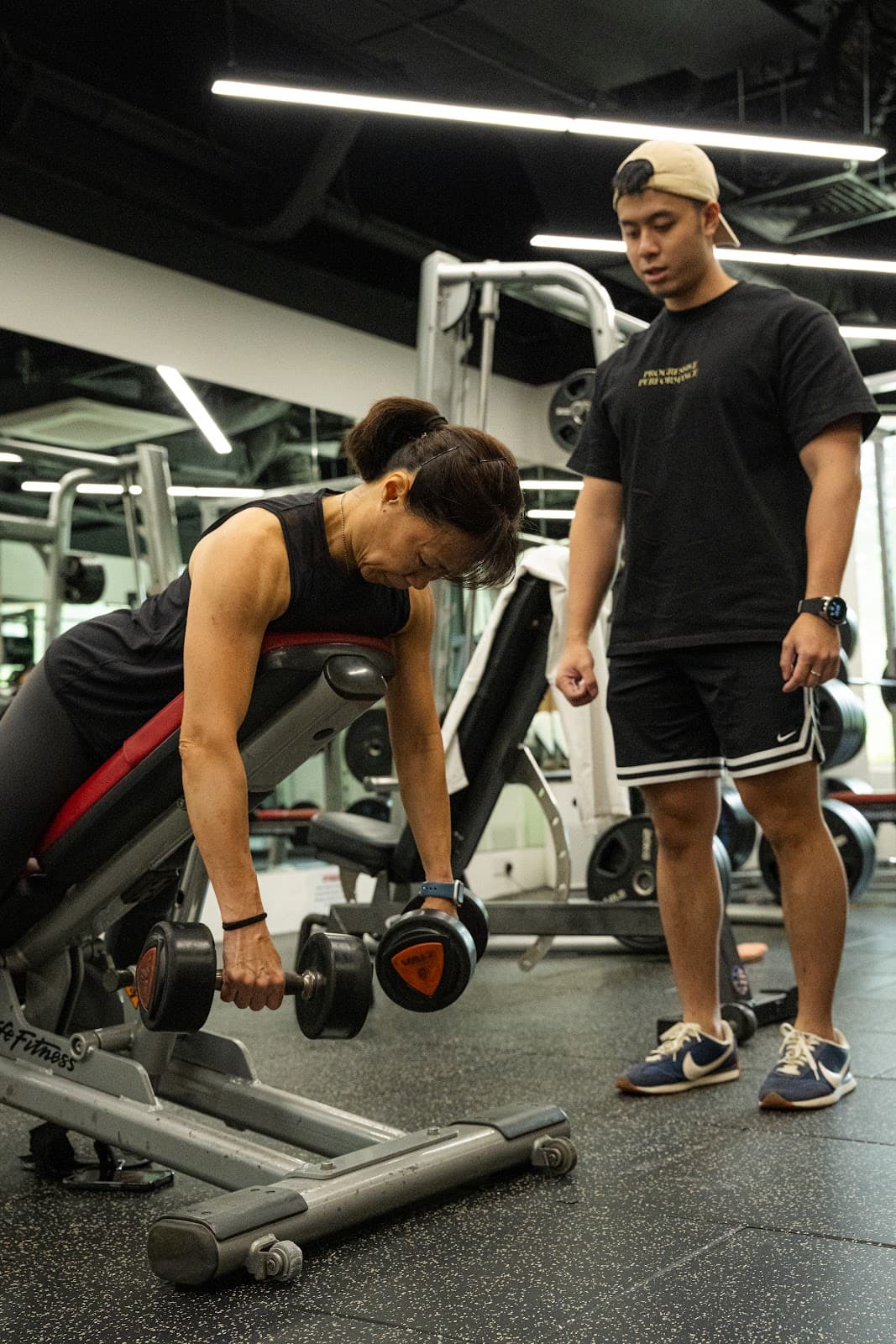
- Exercise and variation: [for example, incline-bench-supported dumbbell row]
- Setup: [bench position or equipment identifier]
- Load convention: [kg per hand, lb per hand, or pair total]
- Set [number]: [actual load and unit], [actual repetitions]
- Repeat the set line for each completed set.
- Sets completed: [number]
- Context or question: [one short note, if needed]
If an exercise uses one side at a time, record each side when the repetitions differ. Keep the names consistent so you can find the previous entry without decoding a new abbreviation every time.
Compare like with like
Start with the previous entry for the same exercise variation and setup. A supported row and an unsupported row are different entries. Changing a machine, bench position or assistance also changes what you are comparing. Note the difference before treating a larger number as progress.
Look at load alongside repetitions and completed sets. More weight with fewer repetitions does not answer every question about the session. Your record should also preserve any coaching note about how the movement was performed. Avoid reducing the review to the heaviest number you can find.
Keep gaps and changes visible
If work runs late and you miss a session, mark it as missed. If you shorten one, keep the completed work and note the time limit. Do not fill a gap with the planned workout. An honest record helps you discuss whether the schedule needs changing.
Health Promotion Board guidance on HealthHub includes both aerobic and muscle-strengthening activity. You can keep walking notes alongside strength entries, while retaining their different details. Our guide to walking and strength training in a busy week explains how both fit into your routine.
Use the log to ask better questions
ACSM's 2026 resistance-training update emphasises regular participation and tailoring training to individual goals. Your notes can support that conversation without creating an automatic rule to lift heavier at every visit.
Ask which entries are genuinely comparable, whether a setup needs to stay consistent and what to focus on next. If repeated time limits are changing the sessions, discuss a plan that fits your available time. Keep the agreed next step separate from the work already recorded.
Questions people ask
Do I need a training app?
No. A notebook or phone note can hold the same information. Choose something you can use during training and find again before your next session. The format matters less than clear, consistent entries.
Should I record warm-up sets?
You can record them, but label them as warm-ups so they stay separate from your working sets. Ask your coach which details matter for your programme. Do not mix every set into one unexplained total.
What if I forgot the repetitions?
Mark them as not recorded. Do not copy the planned number or guess later. Keep the details you do know and use a simpler way to capture the next session while it is fresh.
Bring your notes to the conversation
If you want help reviewing your records, explore our one-to-one personal training or contact Progressive Performance. Bring the entries you have, including gaps and questions.
Sources
- American College of Sports Medicine, 2026 resistance-training guidelines update.
- Centers for Disease Control and Prevention, What Counts as Physical Activity for Adults.
- Health Promotion Board, How Much Exercise Is Enough for a Healthier You.