


Quick answer
Walking is a useful part of an active week. It does not automatically cover the separate recommendation for muscle-strengthening activity. Keep the walks you enjoy, then consider how strength work can fit around them. You do not need to treat everyday movement and gym training as competing choices.
The CDC's adult activity guidance recommends at least 150 minutes of moderate-intensity aerobic activity each week. It also recommends strength work on at least two days each week, covering the major muscle groups. Brisk walking can contribute to the aerobic part. A step count alone does not tell you whether you have covered both.
Your walk to the MRT still matters
You might already walk to the station, head out at lunchtime or take a longer route home. Those habits are worth keeping. WHO's physical activity guidance recognises movement for transport, work and leisure, and emphasises that some activity is better than none.
That does not mean every minute of walking has the same intensity. A relaxed stroll and a brisk walk may feel quite different. Instead of asking whether your commute counts in an all-or-nothing way, consider what you are measuring. Total movement, moderate-intensity activity and strength practice answer different questions.
For example, a calendar entry saying "walk after lunch" is a useful reminder. Adding the time and how the walk felt makes the record more informative. It still is not a record of a strength session.
What strength work adds to the week
Strength training involves working against resistance. Singapore's Health Promotion Board guidance on HealthHub lists bodyweight exercises, resistance bands and weights among the options. Its public guidance includes muscle-strengthening activity on two or more days each week, alongside aerobic activity.
The practical question is which movements and resistance are suitable for your current experience. A coach can explain an exercise, help you practise it and show you what to record. That is more useful than picking a heavy weight because you have seen someone else use it.
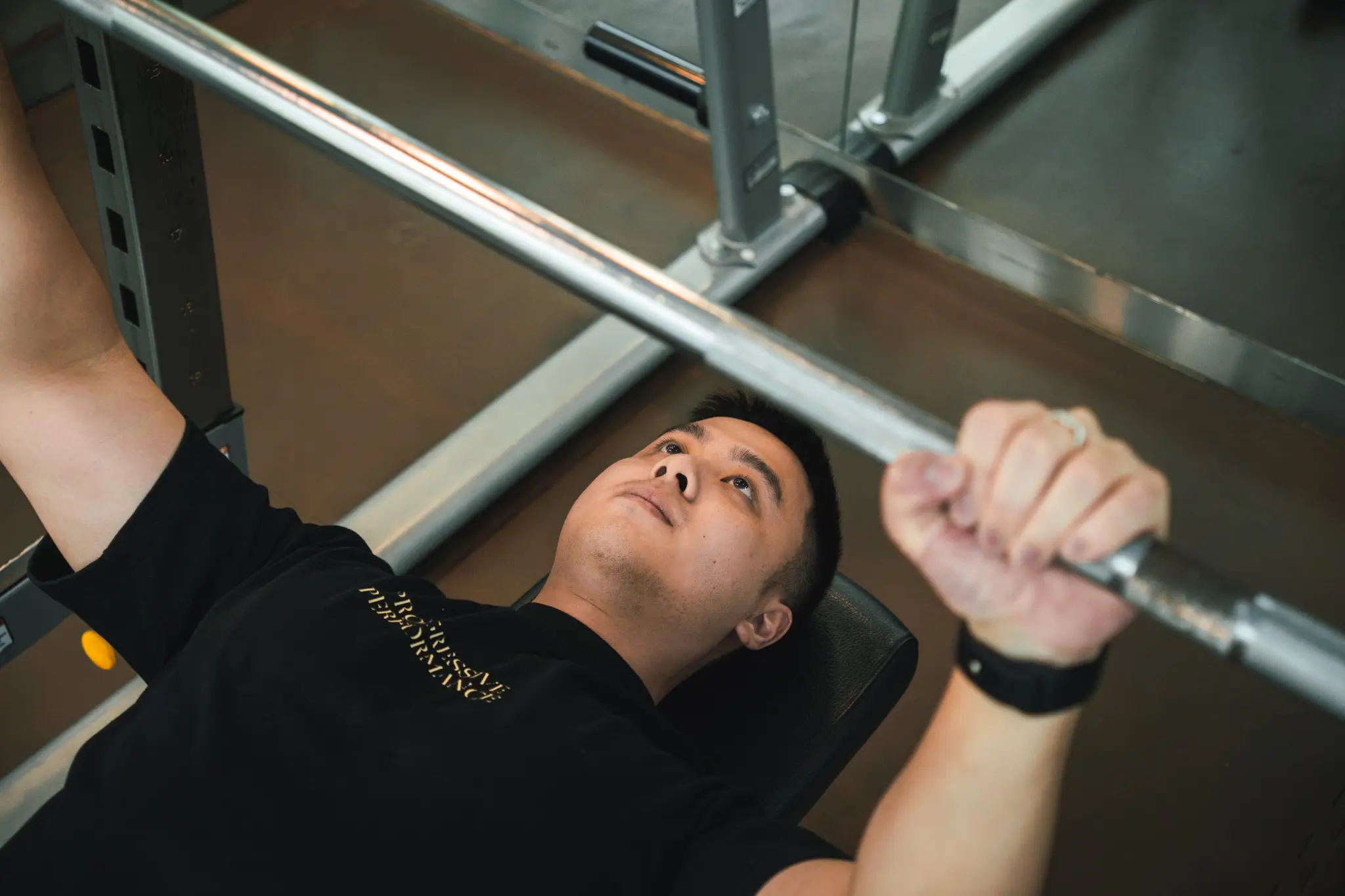
The loaded carry in this article's photo is one example of working with external resistance. It is not a complete programme, and carrying weights is not required to make your regular walks worthwhile. A strength programme should consider the major muscle groups rather than rely on one photographed exercise.
Plan two different kinds of activity
HealthHub summarises Singapore's adult recommendation as 150 to 300 minutes of moderate-intensity aerobic activity per week, plus muscle-strengthening work on at least two days. It also recommends starting with manageable activity and building up over time. These are public-health guidelines, not a personal training prescription.
Give walking and strength their own entries in your plan. Keep familiar walking opportunities in the diary. Look separately for days when you can practise a suitable strength session, with coaching if you need help. Check that the arrangement works around your workload and recovery rather than building an impressive schedule you cannot follow.
If you are starting from very little activity, the guideline is a direction to build towards. It is not a reason to call a short first walk a failure. If symptoms or a medical condition make exercise suitability unclear, seek advice from an appropriately qualified healthcare professional.
Review what you can repeat
A useful weekly review can stay simple:
- Which walks or other activities did you actually do?
- Which planned strength sessions happened?
- Which exercises, resistance and repetitions did you record?
- What made the plan difficult, and what can you change next week?
There is no need to turn this into a competition between step totals and gym numbers. They answer different questions. A missed strength session is information about the plan; it is not cancelled out by a high step count. Equally, a gym session does not make your everyday movement unimportant.
If you train with a coach, use the record to discuss what to practise between sessions. Our guide to how often to see a personal trainer can help you think about that support. The right coaching frequency and your total activity are separate decisions.
Questions people ask
Do 10,000 steps replace strength training?
No. A step total records walking volume. It does not show that you trained the major muscle groups against suitable resistance. The adult guidelines describe aerobic and strengthening activity separately.
Does every walk need to be brisk?
No. Everyday movement still matters. Intensity is relevant when you assess how much moderate-intensity aerobic activity you have accumulated. A slower walk can remain part of an active day.
Do I need to buy weights?
Not necessarily. Resistance can come from bodyweight, bands or equipment. Choose a suitable option you can learn and use consistently rather than buying something before you know how it fits your plan.
Make the next step practical
Bring your current activity and a realistic week to the conversation. Tell the team what you already enjoy, which days you can train and what you would like help learning. That gives you a more useful starting point than a step target alone.
Sources
- Health Promotion Board, How Much Exercise Is Enough for a Healthier You.
- World Health Organization, Physical activity.
- Centers for Disease Control and Prevention, Adult Activity: An Overview.