
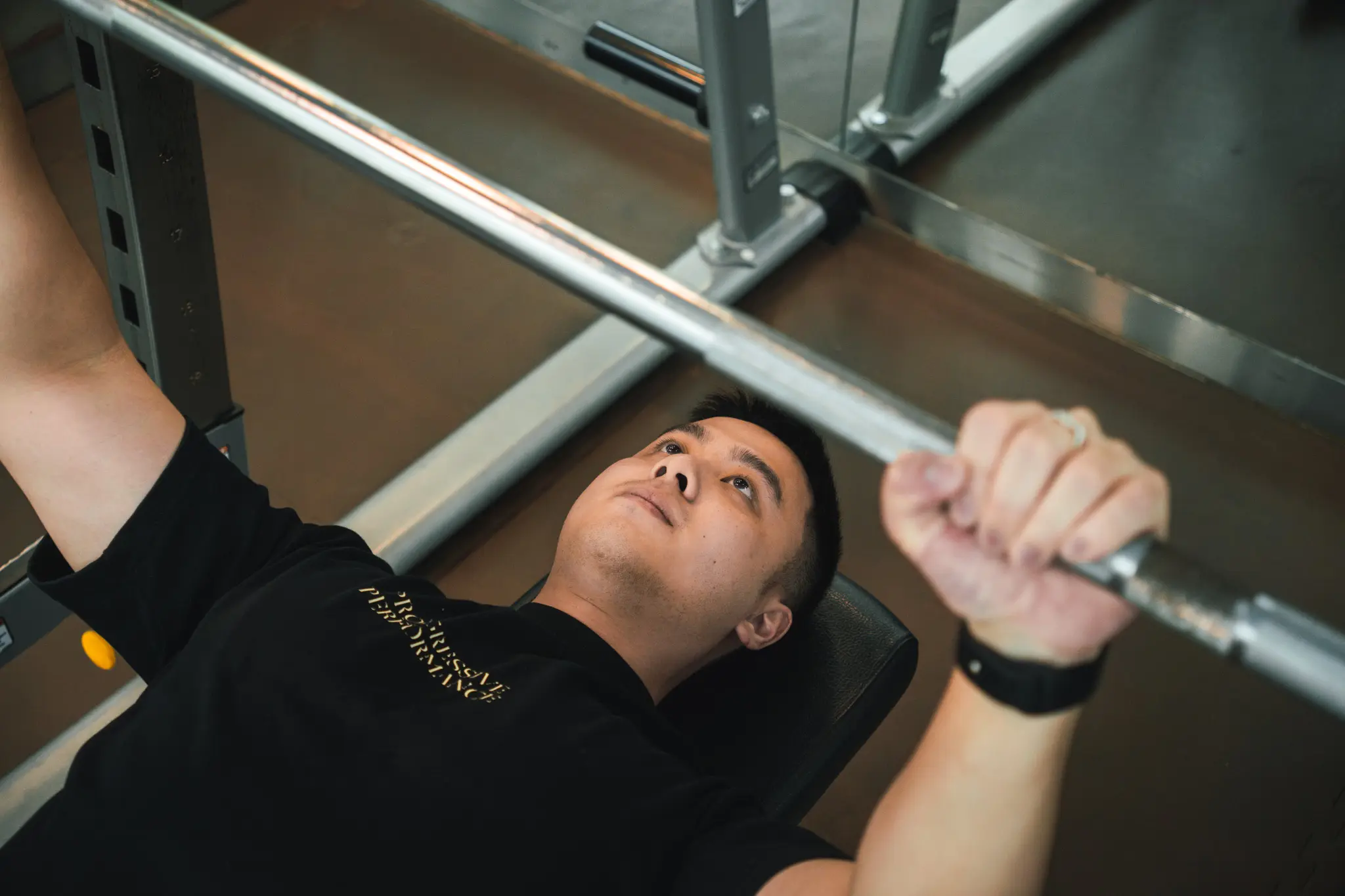
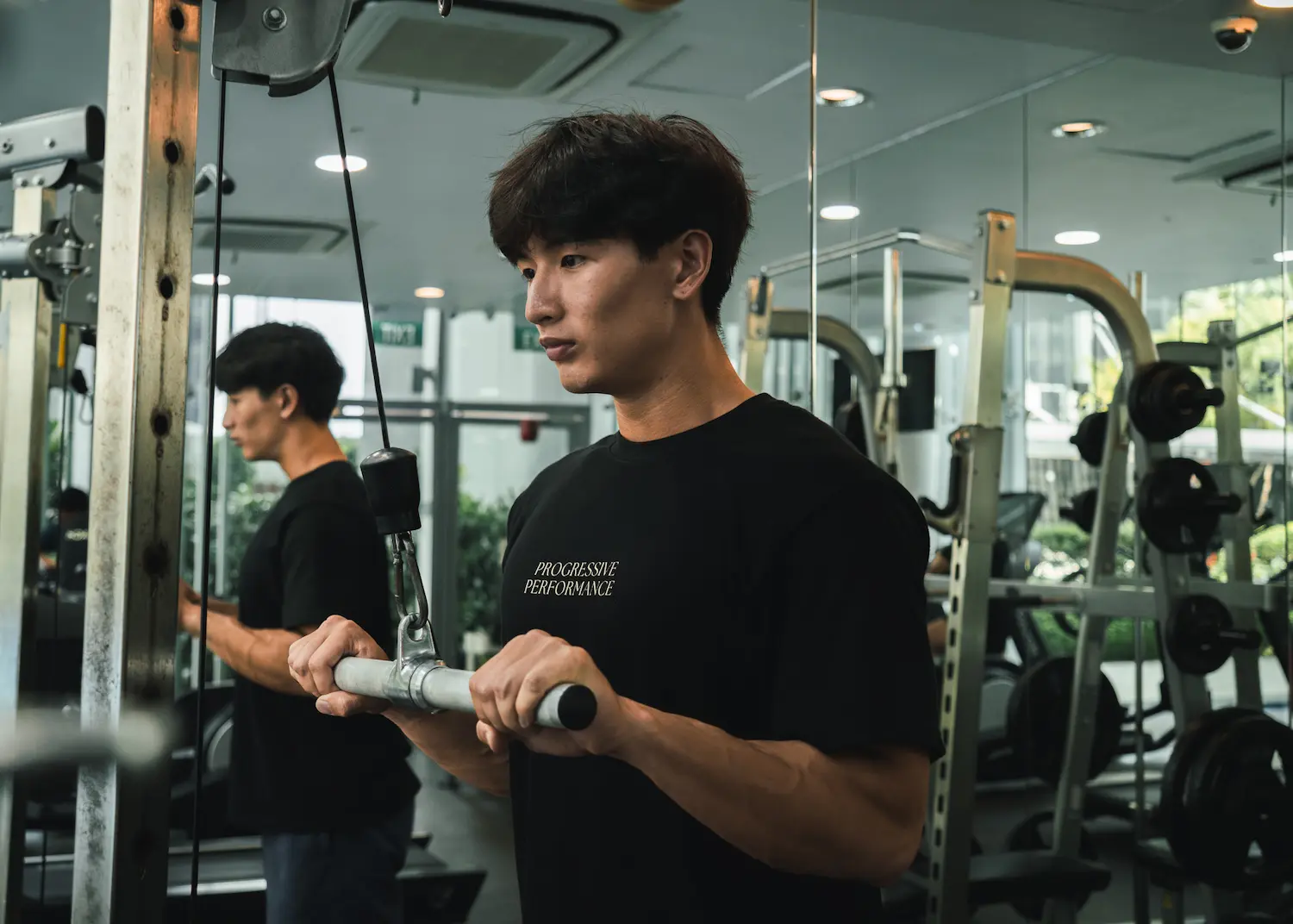

Choose a starting weight that lets you complete the planned repetitions with control and some effort left. Begin with a light practice set, check the movement, then adjust gradually. You can establish a useful first working weight without attempting your heaviest possible lift.
If you train before work or between appointments in Singapore, decide how you will judge that first set before reaching for a dumbbell. This gives you a clear reason to keep, reduce or increase the load.
Know what the set is meant to do
A working set is part of the training your programme asks you to complete. A lighter practice set helps you rehearse the setup and movement beforehand.
Check the exercise, repetitions, sets, rest and intended effort. If your plan gives a repetition range, ask how to use it. Eight to twelve repetitions, for example, describes a range; it does not tell you which weight suits your current ability.
ACSM's 2026 guidance recommends tailoring training to your goals and circumstances. A strength programme can eventually involve heavier loads, but that does not make its heaviest load the right place to learn a new movement.
Rehearse before choosing the working weight
Use a light resistance or an easier version of the exercise while you learn its setup. Practise lifting and lowering with control through the range you have been taught. The NHS strength-exercise guide starts its curl example with light weights and recommends building up gradually.
Check that you can start and finish the exercise, including returning the equipment. Ask for help with an unfamiliar machine or rack. An unloaded bar or machine is not automatically light enough for every beginner.
Once the movement is familiar, make a small adjustment if needed. Allow the planned rest before judging the next set. Repeatedly trying heavier weights with little recovery changes the conditions you are comparing.
Check control and effort together
During your first working set, keep the agreed setup and movement consistent. If you must swing, shorten the movement unexpectedly or change your position to finish, stop and reassess the load or exercise with your coach.
After the set, describe how much more work you think you could have completed with the same technique. This is often called repetitions in reserve. It is an estimate, so combine it with what happened during the movement.
A study of 24 resistance-trained adults found generally accurate estimates when participants predicted one or three repetitions remaining during bench presses. Those results do not establish that a beginner can judge every exercise precisely.
For an unfamiliar exercise, agree a conservative effort target with your coach. You can learn the movement while leaving several repetitions available. ACSM's guidance does not require taking every set to momentary muscle failure for the average healthy adult.
Use the first set to make a decision
Imagine a programme specifies eight to twelve repetitions and asks you to finish with some repetitions available. This example illustrates a decision process, not a personal workout prescription.
- If you complete eight controlled repetitions and feel you could comfortably do many more, discuss a small increase for the next set.
- If you complete the planned repetitions with control and the intended effort, keep that load for the next planned set.
- If you cannot reach the lower end with the agreed movement, reduce the load or use an easier version before continuing.
The same kilogram number can mean different things across exercises and machines. Record which equipment you used. For paired dumbbells, write the weight of each dumbbell so the next session's entry is clear.
Progress when the planned work becomes repeatable
Review the whole exercise before adding weight. Completing the first set comfortably does not establish that every later set will match it.
One practical approach, if it fits your programme, is to build repetitions within the agreed range before increasing resistance. When you can complete the planned sets at the top of that range with the intended control and effort, discuss the smallest manageable increase. Repeat the check at the new load.
If the next dumbbell or machine setting is a large jump, ask about another progression rather than forcing it. Our strength-training log guide explains how to keep your load, repetitions and setup clear. Keep rest consistent too; our rest-between-sets guide covers that part of the session.
Stop if the exercise causes pain or you become unwell. Get professional advice if symptoms persist or you are unsure an exercise suits you, as the NHS exercise guidance advises.
Get help choosing and reviewing your loads
Progressive Performance's one-to-one personal training includes personalised planning, technique work and progress monitoring. Discuss your goals with the team, including which movements you want help learning and the training time you can protect.
Sources
- American College of Sports Medicine. 2026 resistance-training guidelines update. 17 March 2026.
- NHS. Strength exercises. Reviewed 28 February 2024.
- Refalo MC and colleagues. Accuracy of intraset repetitions-in-reserve predictions during the bench press exercise in resistance-trained male and female subjects. Journal of Strength and Conditioning Research. 2024;38(3):e78–e85. DOI: 10.1519/JSC.0000000000004653.
- NHS. Strength and Flex exercise plan: How-to videos. Reviewed 19 August 2026.