
Quick answer
Neither free weights nor resistance machines are universally superior—they perform different, complementary roles in a well-rounded training programme. Resistance machines offer guided stability that isolates target muscles safely, while free weights demand active core stabilization and natural multi-joint coordination.
For adults in Singapore returning to exercise after desk-bound workdays, integrating both modalities provides the safest and most effective pathway to long-term strength.
The advantages of resistance machines
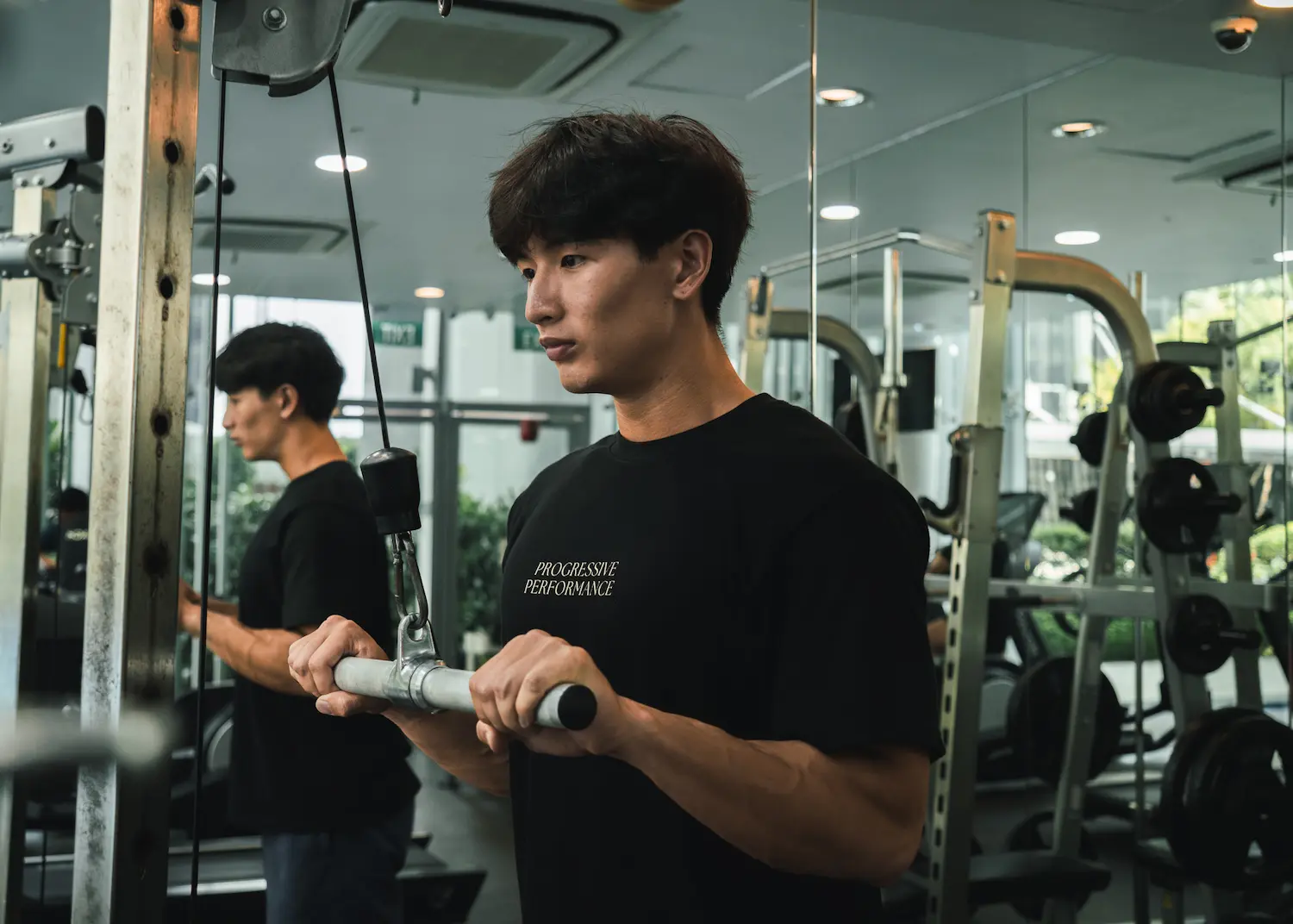
Resistance machines guide movement along a fixed path of motion. This built-in constraint eliminates the need to balance the load in three dimensions, offering key advantages:
- Targeted muscle isolation: You can fatigue a specific muscle group without your grip or balance giving out first.
- Confidence and safety: Adjusting the pin on a weight stack allows immediate load changes without handling heavy loose plates.
- Joint-friendly positioning: Padded back supports and fixed seat angles reduce lower back strain after long hours sitting at an office desk.
The Health Promotion Board on HealthHub recommends regular muscle-strengthening activities that involve all major muscle groups. Machine exercises provide an accessible entry point to hit these recommendations with minimal learning friction.
The unique role of free weights
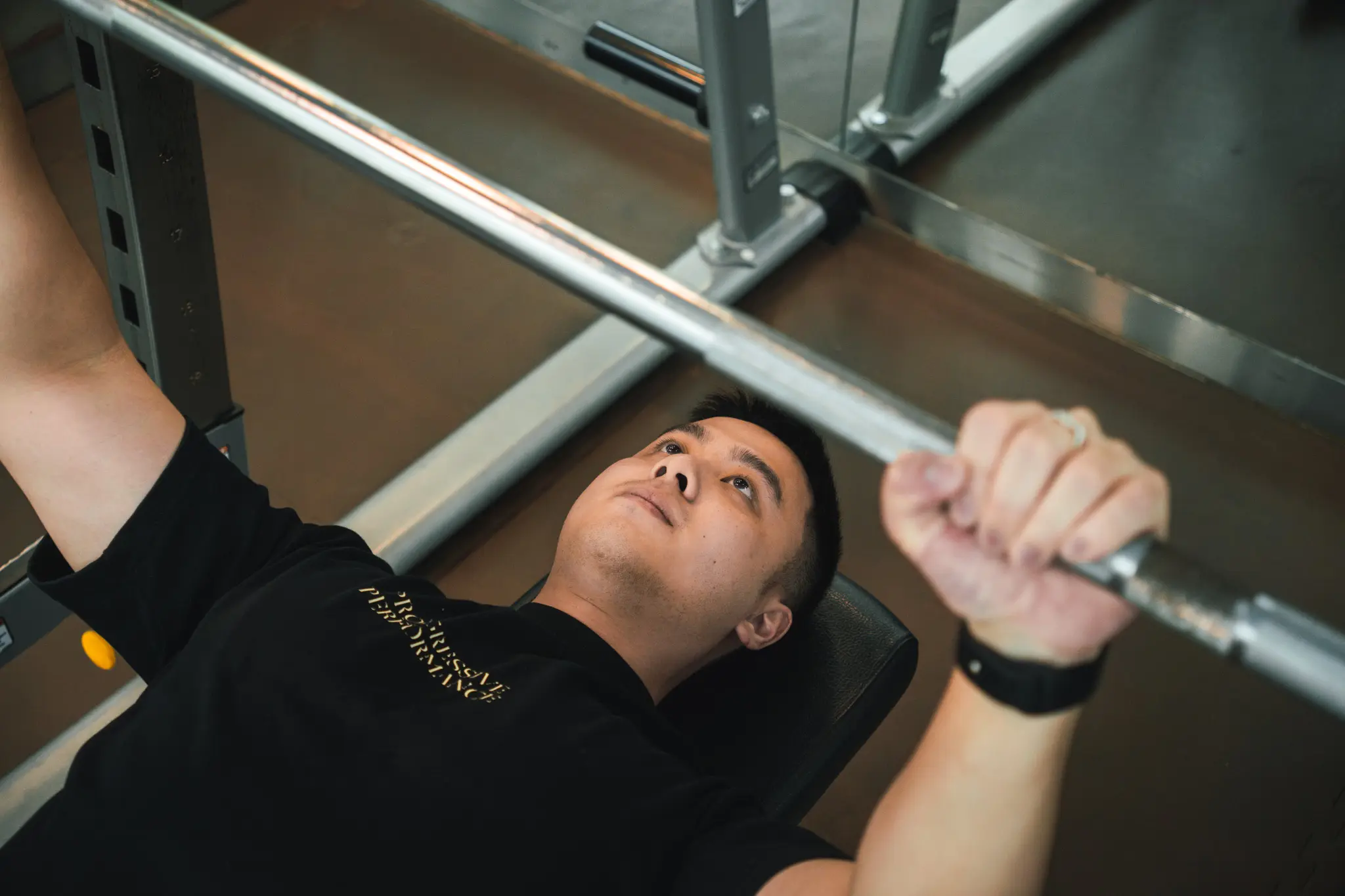
Free weights—including dumbbells, barbells, and kettlebells—do not have a predetermined track. Moving a free weight requires your nervous system to stabilize the load in all planes of motion:
- Functional carry-over: Daily tasks in Singapore, from lifting carry-on luggage into overhead bins to carrying groceries, require three-dimensional stability.
- Natural joint articulation: Unlike rigid machine arms, dumbbells accommodate individual variations in shoulder width, elbow angle, and wrist rotation.
- Balance and core recruitment: Standing or unsupported movements recruit deep stabilizer muscles in the hips, spine, and torso.
The CDC identifies balance and strength activities as vital for sustaining physical autonomy and bone density throughout adulthood.
How a professional coach combines both
ACSM's 2026 resistance-training guidance recommends selecting exercise modalities that match individual training experience, safety requirements, and progression goals.
In practice, a coach often designs a session with complementary layers:
- Primary movement: A multi-joint free weight exercise (such as a goblet squat or dumbbell bench press) when energy and focus are highest.
- Secondary compound: A machine-based exercise (such as a seated cable row or leg press) to accumulate stimulus without excessive stabilization fatigue.
- Accessory focus: Machine or cable variations to safely address individual weaknesses or postural imbalances.
Learn how to track both machine and free-weight loads effectively in our guide to keeping a useful strength training log.
Common misconceptions about gym equipment
Two common myths often mislead beginners:
Myth 1: "Machines are only for beginners." In reality, experienced lifters and athletes regularly use machines to train targeted muscles to high levels of effort without joint wear.
Myth 2: "Free weights are dangerous for novices." With appropriate starting weights and coach instruction, free weights are safe and build lasting movement competence.
How to structure your training week
If you train two to three days each week, aim for balanced exposure. Begin each workout with one or two free-weight exercises while your nervous system is alert, then transition to machine-based work as fatigue sets in.
Review your progress every few weeks to see how your comfort with both tools evolves. Read our breakdown on what a strength training progress review involves to measure your development accurately.
Questions people ask
Should a beginner start with machines or free weights?
A combination works best. Machines allow you to target specific muscle groups with fixed stability, while free weights teach balance, core coordination, and spatial awareness under guidance.
Can you build significant strength using only machines?
Yes. Muscle tissue responds to mechanical tension and progressive overload regardless of whether the resistance comes from a machine weight stack or a dumbbell.
Are free weights dangerous for someone new to the gym?
Not when learned with appropriate loads and proper technique. Free weights develop joint stability and natural movement patterns that support daily activities and sports.
Build confidence with the right equipment
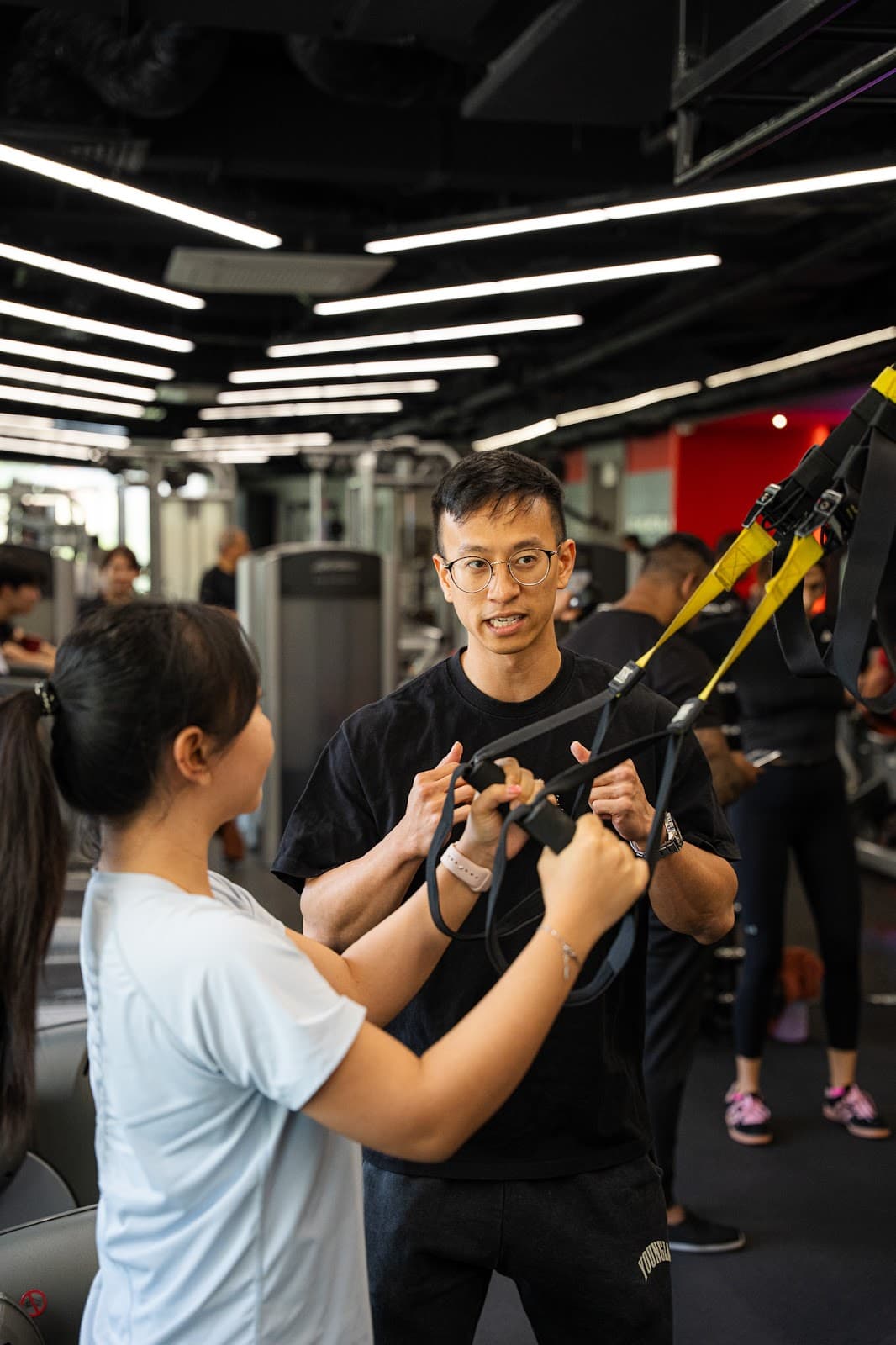
Whether you prefer free weights, machines, or a tailored mix, our coaches help you find what works best for your body. Explore our one-to-one personal training or contact Progressive Performance at our Shenton Way studio.
Sources
- American College of Sports Medicine, 2026 resistance-training guidelines update.
- Centers for Disease Control and Prevention, What Counts as Physical Activity for Adults.
- Health Promotion Board, How Much Exercise Is Enough for a Healthier You.