
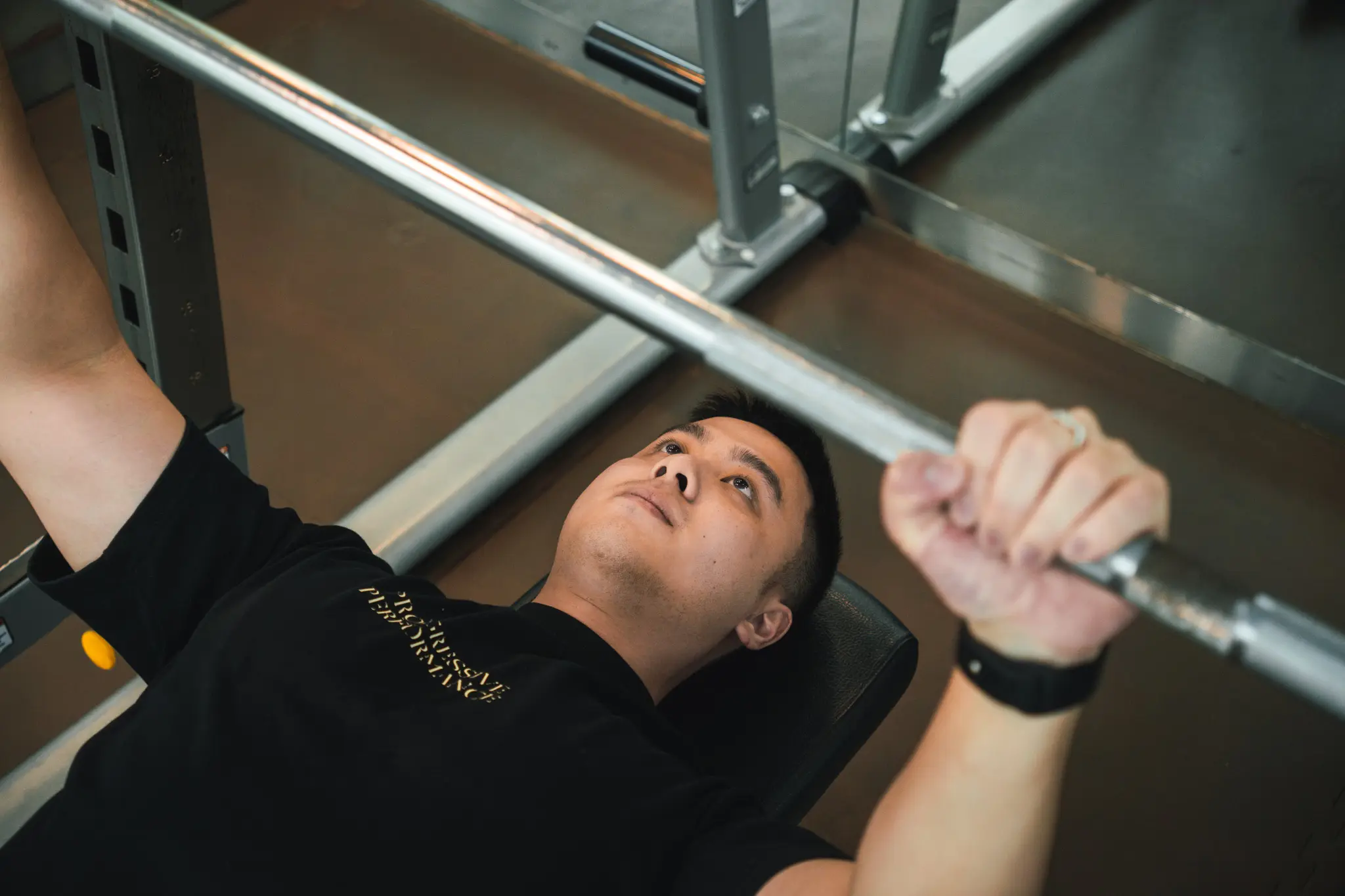

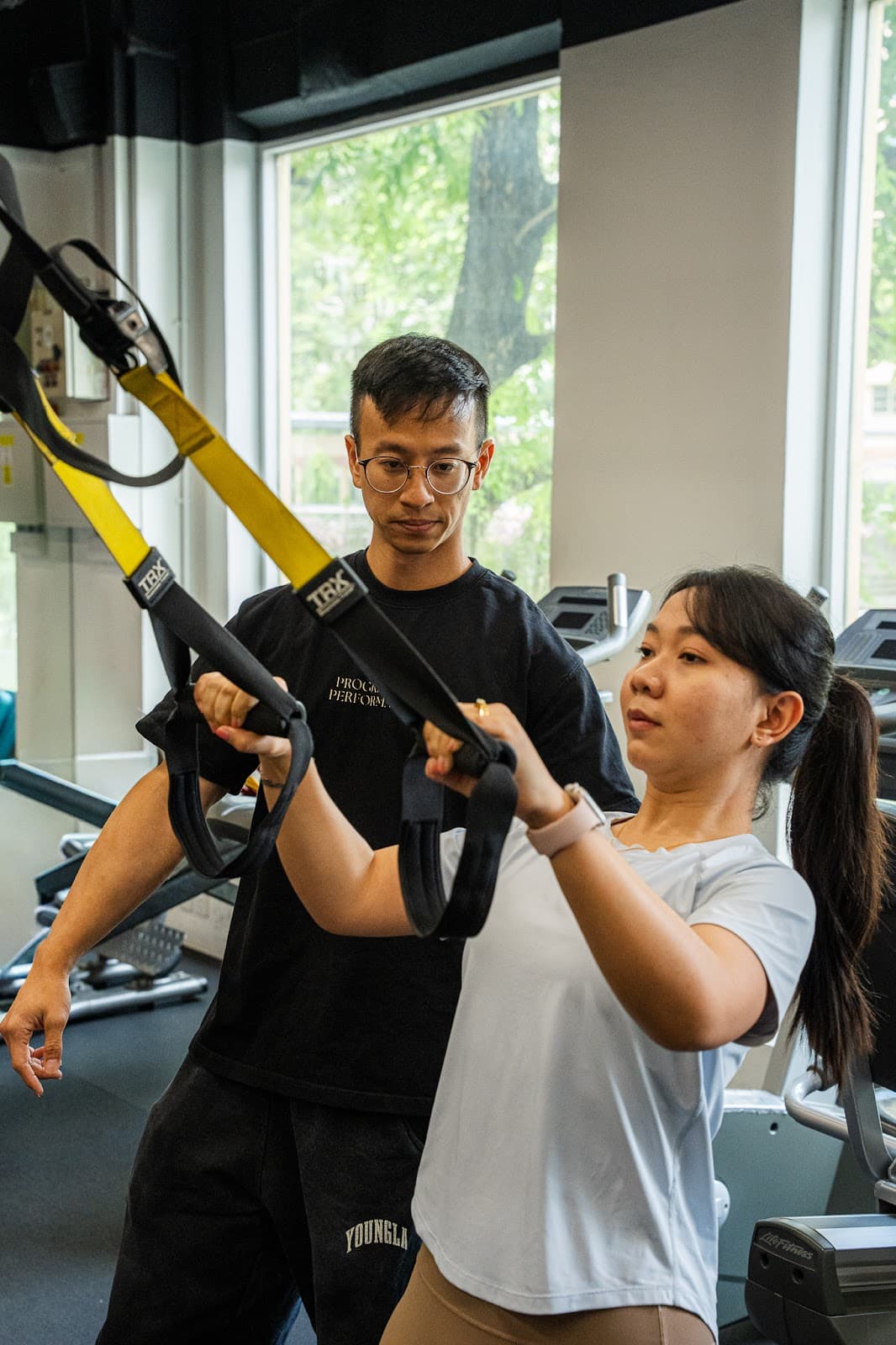
Start your strength workout with the exercise that best matches the session’s priority, after an appropriate warm-up. Decide what you want to improve before choosing which piece of equipment to use first.
For a Singapore professional fitting training between work and evening commitments, that decision is useful before arriving at the gym. If improving your press matters most, leaving it until after several demanding arm exercises changes the conditions in which you practise it.
Exercise order gives your programme a clear emphasis. It also helps explain why a familiar weight can feel different when the same exercise appears later in the session.
Put a specific movement behind the goal
“Get stronger” is a useful overall aim. For the next training block, make it concrete with your coach: improve your bench press, build your rowing strength, or practise a particular movement more consistently.
Place that agreed priority early. Then arrange the remaining exercises around the work you need to complete. A demanding exercise involving several joints may be the first choice, but “biggest muscle first” is too broad to make every decision for you.
First means the first working exercise. Keep your warm-up and preparation sets before it. Moving an exercise earlier is also a reason to check that its preparation still fits.
What changes when an exercise comes later?
Earlier work can affect the repetitions you manage in a subsequent exercise, especially when the movements share working muscles.
In a 2016 experiment with 14 resistance-trained men, researchers reversed the order of bench presses and triceps pushdowns. Each exercise averaged fewer repetitions when performed second. The exercises were paired with a short transition, using loads established through ten-repetition-maximum testing. This was a test of immediate performance, so it cannot establish how much stronger someone would become over months.
A 12-week randomised study involving 31 men compared opposite exercise orders with a control group. Participants had not performed resistance training for at least six months. The two training groups did not differ significantly in absolute strength results. The authors nevertheless recommended placing a priority exercise early, drawing on the pattern of findings and effect sizes. That is a cautious programming recommendation from a small study.
Use this evidence to support a deliberate choice. It does not justify promising extra muscle growth or a fixed improvement simply by rearranging a programme.
Compare two orders with the same exercises
Suppose you and your coach have already chosen the following four exercises for an upper-body session. The table changes the order while keeping the exercise list identical.
This is an illustrative planning example. It does not specify your loads, sets, repetitions or rest periods.
| Position | Bench press is the priority | Row is the priority |
|---|---|---|
| First working exercise | Dumbbell bench press | Chest-supported dumbbell row |
| Second | Chest-supported dumbbell row | Dumbbell bench press |
| Third | Triceps pushdown | Triceps pushdown |
| Fourth | Biceps curl | Biceps curl |
In the first version, the press receives the first working slot. In the second, the row does. Neither version adds exercises or earns an automatic claim to better overall results. Your coach would also check whether the later exercises remain suitable and manageable in that order.
Now consider a different change: starting with demanding triceps pushdowns while keeping bench-press strength as the priority. Because both exercises involve the triceps, discuss that trade-off before assuming the press will perform as it did when it came first.
If every exercise feels equally important, choose the first one with your coach and review that choice after a consistent period of training. You can agree different priorities for different sessions without changing the order at random each visit.
Keep performance comparisons fair
Record when an exercise moves. A lower repetition count after more preceding work does not, by itself, prove you have lost strength. Equally, a better number after moving an exercise first does not isolate a long-term training improvement.
A useful note in your training log might read: “Row moved from second to first today; bench press followed it.” Compare future sessions with that context, alongside the load, repetitions and how demanding the sets felt.
Keep rest periods consistent enough to interpret the comparison. If order, rest and load all change together, it becomes harder to identify what influenced the result.
Have a plan for unavailable equipment
If your first station is occupied, use a decision you have agreed in advance: wait briefly, use a suitable alternative, or move another exercise ahead. Tell your coach which change you made and record it.
When you return to the original exercise later, assess the working weight against your technique and planned effort. Avoid treating the earlier version of the session as an obligation to reproduce the same numbers.
If time is regularly running out before the final exercises, review the session’s workload and duration. Reordering alone cannot make an oversized plan fit every lunch break.
Bring your sequence to your coach
Progressive Performance’s one-to-one personal training includes goal setting, personalised planning and progress monitoring. Bring your current exercise list and identify the movement you most want to improve. Discuss your exercise order with the team so that your next session has a clear starting priority.