
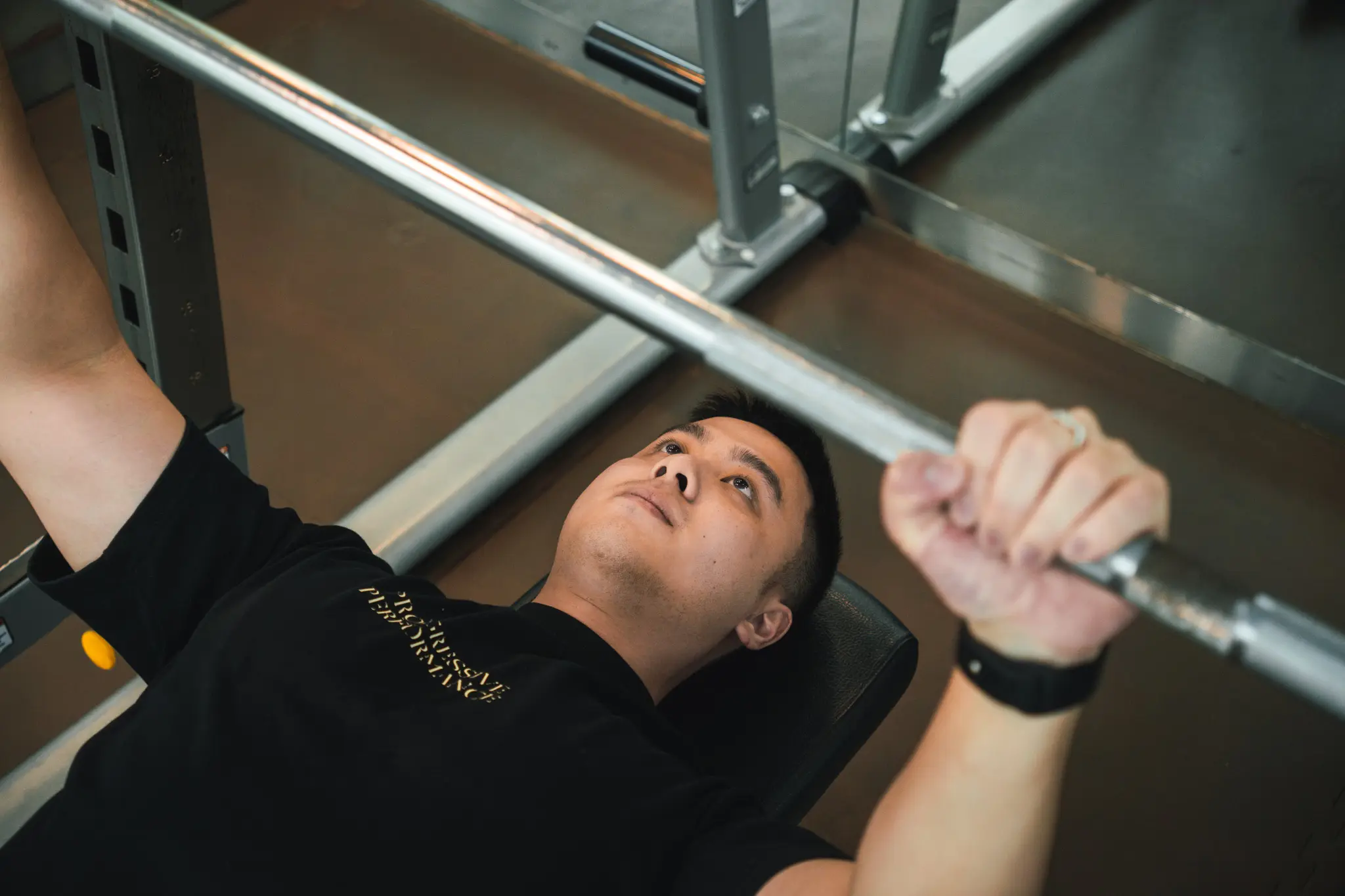


A demanding week at work can make your usual gym programme feel very different. If you are considering a deload week, start by agreeing what you will reduce and when you will review it. A lighter week can keep training manageable, but research has not established one schedule that everyone needs.
This guide gives you a way to discuss the change with your coach, record it and return to your usual programme without trying to make up every missed set.
What a deload week changes
A deload is a planned period of lower training stress. You might do fewer working sets, use less weight, stop sets earlier or attend fewer sessions. Choose the adjustment around the reason for reducing the workload.
In a 2023 Delphi study, experienced strength and physique coaches developed principles for using deloads. Their views support adapting the approach to the person and the programme. That is expert consensus, rather than a trial showing that a particular reduction produces better results. Read Bell and colleagues’ study.
Review the pattern before changing the week
Bring your recent training log to the conversation. Compare the same exercises, weights and repetitions across sessions. Note whether sessions have repeatedly felt harder, performance has fallen or the programme has become difficult to complete alongside work and sleep.
One disappointing session gives you limited information. A meeting that ran late, a changed exercise order or a different rest period can also make comparisons less useful. Record the context before deciding that the whole programme needs a break.
Agree a concrete purpose: fewer sets during a deadline week, for example, followed by a review before the next training week. If you have only recently started and your current workload feels manageable, discuss that too. An automatic reduction every fourth week is not a requirement established for every recreational lifter.
What the research can tell you
A 2024 trial assigned resistance-trained adults to continuous training or a week without resistance training during a nine-week programme. The continuous group improved lower-body strength more, while measured lower-body muscle growth did not clearly differ. This tested a complete training pause, so it does not settle how a lighter week of exercise compares. Read Coleman and colleagues’ trial.
A 2026 study used a different approach. Nineteen untrained young men trained their limbs under different conditions over eight weeks. The reduced-work condition used fewer sets and fewer sessions in weeks four and eight. The researchers detected no clear difference between conditions in muscle thickness or the tested ten-repetition performance. The small sample, selected exercises and short duration limit how widely this finding applies. Read Pancar and colleagues’ trial.
Together, these studies give you reasons to be specific about the plan. Taking a week off and doing a smaller amount of training are different interventions. Neither study proves that every busy professional will benefit from a scheduled deload.
An illustrative lighter session
Suppose your normal session includes three working sets each of a squat variation, a press and a row. Your coach could reduce that to one or two sets of each familiar exercise for the agreed week. Choose a load and repetition target that leaves several comfortable repetitions available, and keep the planned rest periods.
This is an example to discuss, rather than a tested optimum or an individual prescription. Warm-up sets still serve their usual purpose. Avoid turning the shorter session into an extra circuit or adding sets elsewhere that replace everything you removed.
Write down the changes: exercises, working sets, load, repetitions and how hard each set felt. Our working-set guide explains what to count. The record makes it easier to distinguish a deliberate adjustment from a missed session.
Set the return plan before you start
Agree when you will review the lighter week and what the next session will contain. Use your warm-up and the first working set to discuss whether the planned return feels appropriate. Resume the agreed workload at a suitable pace, without combining the removed sets with the next week’s programme.
If the same difficulty persists, review the wider programme with your coach. A lighter week is not a diagnosis for pain or ongoing unexplained fatigue; seek an appropriate healthcare assessment when those are the concern.
For professionals training around Shenton Way and the CBD, Progressive Performance’s one-to-one coaching includes personalised programming and progress reviews. Discuss a training plan that fits your week, including how you will adjust it when work gets demanding.